Remember,
if it ain't fun,
it ain't bonsai!
Golden Arrow Bonsai
"Let Yourself Go Wild"
Ancient Collected Trees
Andrew Smith, 22473 Alpine Acres Dr., Deadwood, S.D. 57732 605-342-4467 goldenarrowbonsai@gmail.com
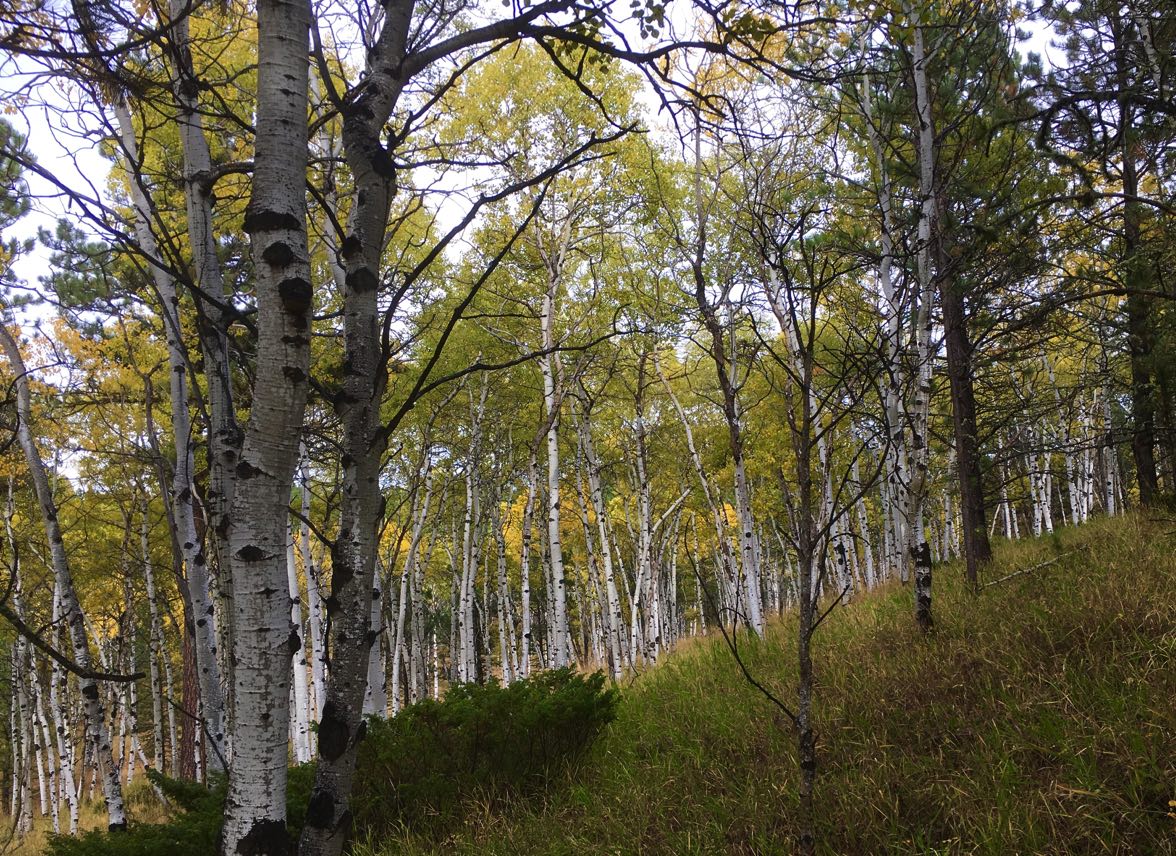
This is the home page
How in the heck do you get here?
1)Head to wonderful South Dakota!
2) We're about 22 miles west of Rapid City, 22 miles south of Deadwood, and 22 miles north of Hill City. All distances are rounded up or down to make them 22 miles!
3) From US Hwy 385, stop at Cousins Pizza or the Sugar Shack and have a great pizza, burger or beer. When you're finished, turn west on the Rochford Rd. (FR 261), and go one mile to Alpine Acres Dr. We're right at the top of the hill. Call first and see if we're home. 605-342-4467
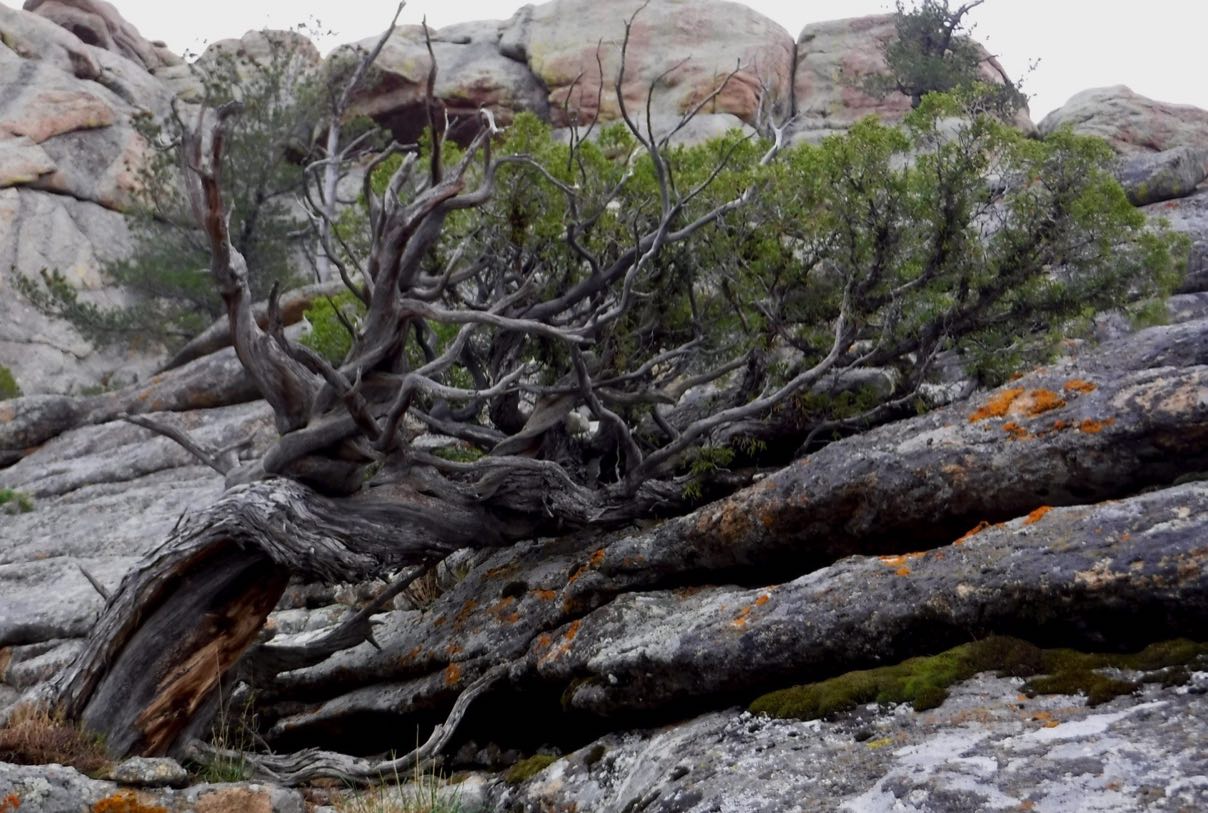
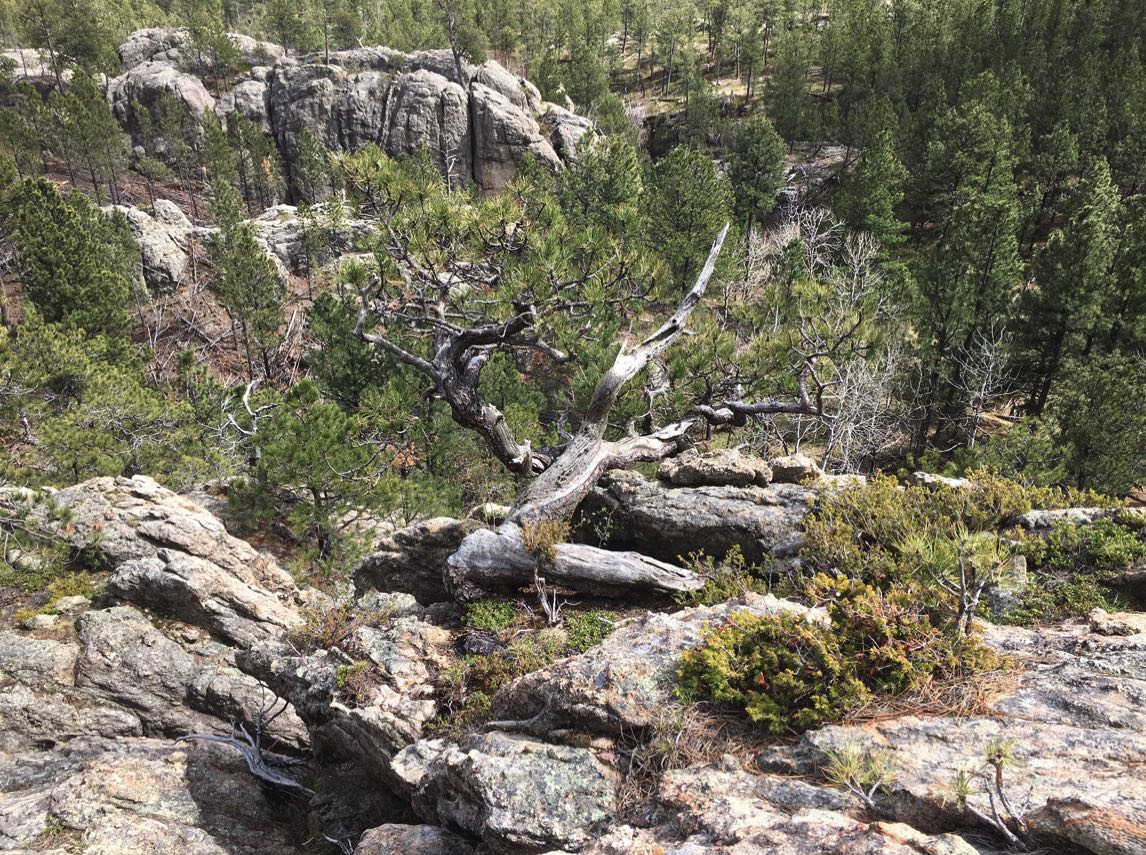
An ancient pine in it's rocky home.
Judy and I began working in the woods over 35 years ago.
During that time we have marked timber, cruised timber,
planted trees, thinned trees, recorded ancient trees and
fought fires. And, somehow, we're still doing it today. In the
winter of 1994 Judy bought me a small bonsai tree from
K-Mart. I was immediately fascinated by it and set out to learn as much as I could about
bonsai. The following spring I began to transplant some of the contorted pines I often
saw at work, to see if I could grow and train them as bonsai. That was the start of Golden
Arrow Bonsai. Since then I've transplanted many thousands of wild trees for bonsai
training. I enjoy it immensley, and with Judy's help, I hope to continue for many years.
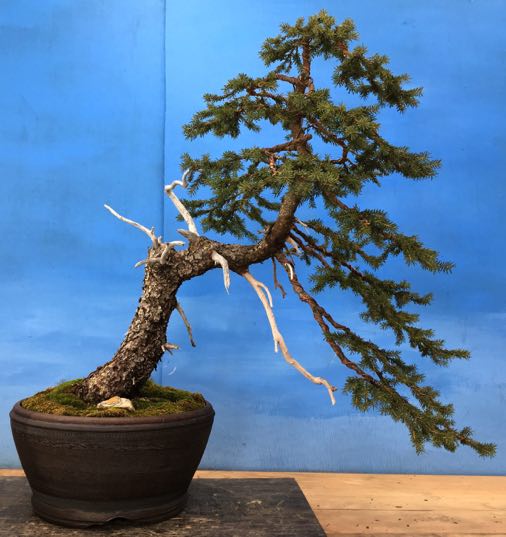
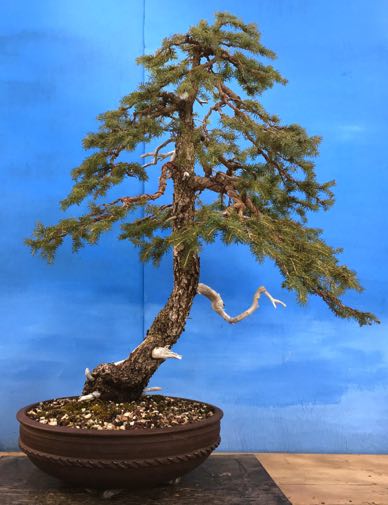
Black Hills spruce. In training since 2012. Estimated age 150 years.
What is bonsai? And how do I order a tree?
What is bonsai?
I think of bonsai as a poem in a pot. Each tree is a collaboration between nature and a caretaker/artist. The goal is to create a scene of beauty that reflects the natural world in some way. This could be something very literal, like a miniature tree or scene from nature, or it could be something much more abstract that uses a tree as a study in line or form. Or something else. There really are no limits to what bonsai can be. But it takes great skill and love to work with a tree in such a way that you guide it, without overpowering it. Most of the trees I offer for sale are not bonsai yet. But they are excellent trees to start with, that you can shape and train as bonsai over the years.
How do I order a tree?
Since every tree is a different size, weight and will ship at a different rate, I don't have automatic purchasing buttons on my site. Also, you might unknowingly order a tree that won't live in your area. For these reasons, if you want to order something please send me an e-mail at: goldenarrowbonsai@gmail.com. Let me know what you want, and your shipping address. I'll make sure the tree or item is still available and able to be shipped. I'll then send you an online invoice via PayPal. You can pay this with a credit card, check or money order. I can also take a CC# over the phone, but for your security I avoid this if possible. As soon as payment is made I'll ship at the first opportunity, unless other arrangements are made.
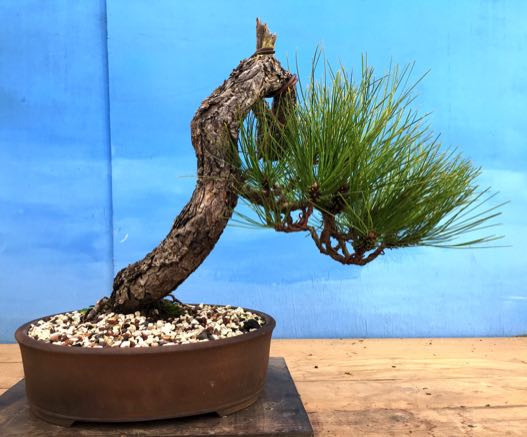
Ponderosa pine.
In training since 2014.
Estimated age 60 years.
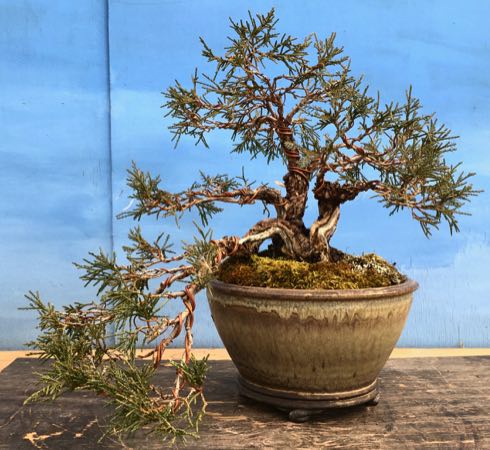
Rocky Mt. juniper. In training since 2016. Estimated age 85 years.
Black Hills spruce.
In training since 1997.
Estimated age 200 years.
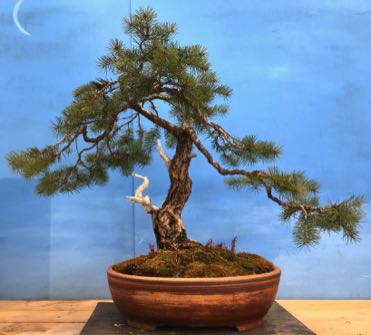
Douglas fir.
In training since 2009.
Estimated age 125 years.
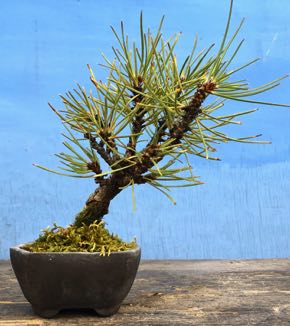
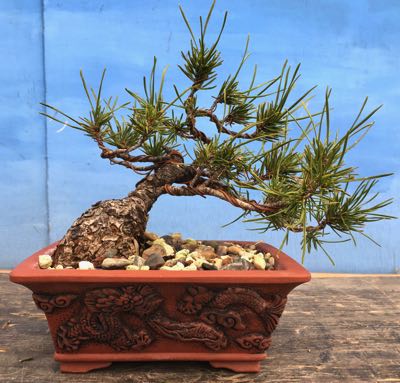
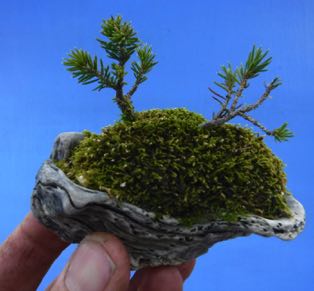
A tiny ponderosa pine
A shohin lodgepole pine
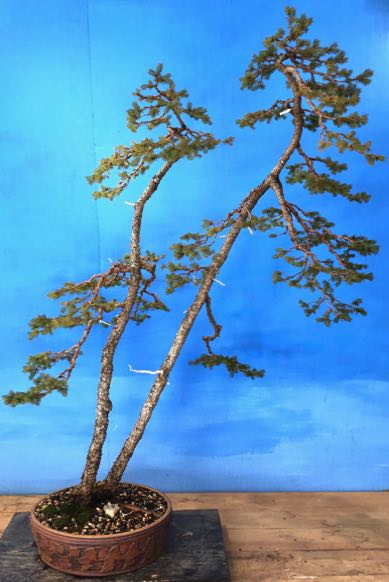
Black Hills spruce.
In training since 2002.
Estimated age 125 years.
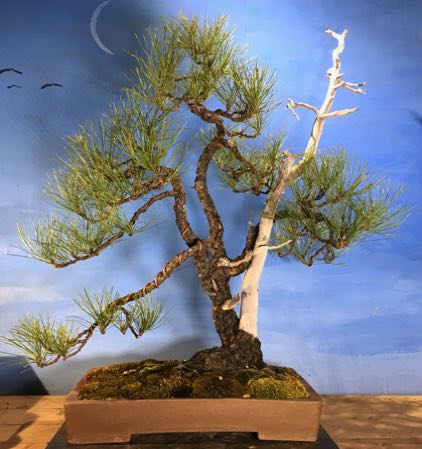
Ponderosa pine. In training since 2012. Estimated age 125 years.
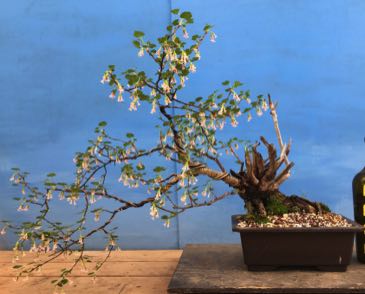
Western red currant
Welcome to Golden Arrow Bonsai! For the last 20+ years we've specialized in transplanting wild trees from the mountains of the American west for bonsai training. Some of the most desirable trees to use for bonsai training are specimens collected from nature that may already be quite old and show the distinctive character and charm that comes with a long and relentless struggle for survival. Transplanting trees from nature, with a valid permit, is legal in select locations on both public and private lands. The photo above shows a 300-400 year old ponderosa pine growing on top of a cliff. This tree is too big for bonsai! Common juniper, kinnikinnick and western red currant are visible growing around the base of the tree.