(Author's note: I wrote this essay years ago, before I became interested in bonsai. In fact, it was the research I did for this and the previous (Lakota) piece that first got me interested in bonsai.)

The Meanings of a Tree
Andrew Smith

Trees are, perhaps, the most generous of beings. Almost everything about a tree is useful in some way, either to man, or to one or another of the myriad creatures that inhabit this earth. Trees are essential to life as we know it, simply because they are useful in such an amazing variety of ways.

Countless species of trees provide sturdy lumber for building and construction, and for the manufacture of plywoods, chipboards, and particle boards. Other timber species provide fine and exotic woods for furniture, cabinetry, carving, veneers, gunstocks, pool cues and a host of other premium uses. Trees that are unsuitable, or too small, for timber production, can provide a source of firewood for cold winter nights, or charcoal for industry. The great coal veins of North America are the remains of vast ancient forests, that have kept the suns ancient energy locked inside them for millions of years.

Trees provide the main source of high quality fiber for the manufacture of paper, tissue, and cardboard. This book is printed on the product of a tree. At least one species, western hemlock, also provides alpha cellulose, which is used in the manufacture of cellophane, rayon yarn, and even plastic!

In former times the many unique properties of various tree species, and their wood, was well known. Today most of us are not as keenly aware of the different qualities of each type of wood. A colonist would have used straight and stout white pine for a ships mast, and tough, water-resistant white oak for the hull. Today, the water-tight qualities of white oak are still utilized to make casks to age whiskey, bourbon, and other fine spirits, while white pine is used for top grade construction lumber.

Locust and cedar trees were once favored for fence posts, because the wood was so rot resistant that a seasoned post might last for fifty years. Today, pressure treated fir can last just as long. In the eastern U.S. osage orange, or "hedge," was often planted to form a living fence, because the dense, tough thorns would keep the most stubborn stock from wandering away. Osage was also a favorite material for making bows among Native American people, because the resilient wood retained its spring after years of use.

Ash and hickory are favorites for durable tool handles. Sweetgum and poplar are used for trim and moldings. Persimmon is used for golf club heads, because of its weight and durability. Black cherry and walnut make fine furniture. Curly maple and resinous spruce make fine instruments. Red oak makes a beautiful floor. Birch makes a beautiful basketball court. The varying grain, color, density, and composition of each type of wood makes it useful for an almost infinite variety of differing needs.

Tree bark, and roots, have been a source of medicine for thousands of years. Many species of willow and poplar contain salicin, which is an analgesic similar to aspirin. Cancer researchers are currently interested in a species of yew from the Pacific Northwest whose bark contains a valuable cancer fighting drug. Native Americans, colonists, and other people living close to nature developed a huge folklore on the medicinal qualities of various tree species. Much of this knowledge was overlooked or forgotten in light of the amazing medical advances of the last fifty years, and is being rediscovered today. Michael Balick, director of the New York Botanical Gardens Institute of Economic Botany, has stated that out of the 265,000 species of identified plants on earth, only about 1,100 of them have been studied thoroughly by western science. He estimates as many as 40,000 of them may have undiscovered medicinal or nutritional value for man.

Bark is also the source for many chemicals and dyes used by industry. Tannic acid, used in curing green hides into soft leather, is a product of tree bark. Bottle corks and cork board are cut from the bark of a species of Mediterranean oak tree. Sassafras oil, from the roots of the sassafras tree was the original source of the flavoring for root beer, hence its name. Birch bark produces fragrant wintergreen oil, used in making candies, as well as natures finest material for making baskets and canoes. Tung oil is a product of the princess tree. The bark of black alder has been used for centuries as an insecticide, and to rid the body of fleas and lice.

And tree bark has made cultural contributions as well. The smooth grey bark of the beech tree has provided an irresistible opportunity for generations of lovestruck carvers. The Latin proverb, "Crescent illae; crescetis amore" (as these letters grow, so may our love), attests to the ancientness of this custom. The Germans and Saxons also associated beech trees with letters and writing, which perhaps explains why the words beech and book come from the same root.

In fact, several ancient alphabets, among them the Greek, German, and Celtic, were associated with trees. The characters of each alphabet were represented by various species of trees, each of which had other, often celestial or metaphysical, associations attached to it. For instance, in the Celtic alphabet, the first letter was represented by the silver fir, called the birth-tree, which also represented spring. The last letter of the alphabet was represented by the yew tree, the death tree, which also stood for winter. It is interesting to note that in our alphabet today the word tree starts with T, which of all the letters most resembles the shape of a tree. And the lower case t, is most definitely a cross, which has been a symbol associated with trees since pre-Christian times.

Tree sap is also a valuable commercial commodity. Many species of maples contain sap with a sugar content high enough that it can be made into syrup. In principal, this can be done with most species of trees, although the volumes of sap required make it unpractical. In Montana we once came upon some ancient ponderosa pines that had been scarred centuries earlier by Indian children who cherished the sugar rich inner bark as candy. Pine sap is also used to make turpentine and other commercial compounds. The sap of the acacia tree is used to make gum arabic, which is used in foods, medicines, and on the back of postage stamps.

Camphor crystals are distilled from the bark and leaves of the camphor-tree, and used to make medicines, deodorants, insecticides, disinfectants, perfumes, soap, and explosives. The sap of the sweetgum tree was formerly used to make chewing gum, and chewing gum made from spruce sap is sometimes found for sale in the northern New England states. And, of course, rubber is made from the sap of the rubber tree.

And how could anyone forget that trees provide the world with apples, oranges, bananas, carob, pears, walnuts, coconuts, grapefruit, cherries, pecans, peaches, limes, lemons, almonds, olives, acorns, cashews, plums, figs, persimmons, paw-paws and a whole host of nutritious, and tasty, foods, oils, and juices?

Outside of commercial products, a tree plays a vital role in the natural ecosystem. Most of the fertile farmland in the eastern United States was created by uncounted eons of falling leaves and decaying forest litter from the vast, unbroken forests that formerly covered the area. As trees grow and die, they convert sunlight into rich organic materials that form the basis for all other life on the planet.

Tree roots aerate the soil, by creating openings within it that allow the passage of water, oxygen, and organic materials to deeper soil layers, and encourage the growth of microorganisms that are critical to soil fertility. Tree roots also hold the soil together, which reduces topsoil erosion, and protects local water sources from siltation and runoff. Trees can play a critical role in maintaining groundwater quality by absorbing and breaking down pollutants, and slowing the spread of pollutants through the soil and into groundwater.

Evergreens from around Chernobyl in the former Soviet Union have absorbed so much radiation from the nuclear accident there that they cannot be used for Christmas trees anymore. Unfortunately, the radiation will still be around, long after the trees are gone.
As they decline and eventually die, trees provide shelter and nesting sites for a wide array of birds, small mammals, insects, snakes, and amphibians. Stands of trees, especially dense stands of young small trees, provide critical thermal and hiding shelter for wildlife of all kinds. In addition, many animals depend on trees for part, or all, of their diet.

Trees also play a vital, though poorly understood, role in regulating atmosphere and weather. Condensation nuclei responsible for cloud formation, and hence rain, are made up of naturally occurring microscopic airborne particles. Two of the particles that play a large role in weather formation are smoke from forest fires, and organic terpenes. Terpenes are a naturally released product of vegetation, which, when combined with ozone, causes the beautiful blue cast to distant mountains and horizons. There are over 11,000 known terpenes in existence, the most well known of which is gum turpentine.

The role of trees and forests in creating oxygen has received considerable attention lately. The so called greenhouse gas, carbon dioxide, is broken down by trees, and other green plants, in the process of photosynthesis. One byproduct of this utilization is the release of free oxygen into the atmosphere. What a man breaths out (carbon dioxide) a tree breaths in, and what a tree breaths out (oxygen) a man breaths in.

The aesthetic value of trees in our cities and in the landscape should not be underestimated. A few well placed trees can add an immeasurable amount of wonder and charm to almost any landscape. The cool shade of the forest depths can add a touch of mystery to any horizon. Artists and poets have been inspired by trees for all of recorded history. Twenty five hundred years ago, these verses were recorded by the legendary Chinese sage Lao-Tzu;
"As naturally as a seed becomes a tree of arm-wide girth
There can rise a nine-tiered tower from a man's handful of earth
Or here at your feet, a thousand-mile journey have its birth..."

Since trees are so endlessly useful in the practical world, it is no surprise that they provide rich, meaningful symbols in the world of story and myth as well. Trees have been used for countless centuries as a symbol of the recurring eternal cycles of nature, and the holy mysteries of life.

Trees play a prominent role in the origin myths of many cultures. In Virgil's Aeneid Evander tells Aenas that the city of Rome was founded by the God Saturn, together with "a race of men that came from tree trunks, from hard oak..." In Greek legend various gods are frequently getting transformed into a tree, which then sometimes gives birth to another god. Adonis was born in this way. The Egyptian god Osiris also sprang from a tree.

The Iranian folk heroes Mashya and Mashyoi grew up in the form of a tree, the rivas-plant. Eventually they changed into human form and received souls. The tree continued to grow however, and brought forth fruit that became the ten varieties of men.

The Kayan people of Borneo say that originally there was nothing but ocean and sky. From the sky fell a great boulder, which in time became covered with soil. Then the handle of a sword fell from the sun, and took root in the soil, and grew into a mighty tree. Meanwhile, from the moon fell a vine, which also rooted in the soil and clung to the tree. From the mating of the tree and the vine were born a boy and a girl, who eventually married and became the ancestors of the Kayan.

Stories such as these illustrate the connection trees have to the creation mythology of mankind. An even clearer example of this is the Tree of Life, which is a very ancient image, and common to many diverse peoples and places.

It is interesting to note that the Bible both opens and closes with the image of the Tree of Life. In Genesis, chapters two and three, we learn that God planted a garden in Eden, and in the middle of the garden grew the Tree of Life, and also the Tree of Death -the Tree of the Knowledge of Good and Evil.

God commanded Adam and Eve not to eat from the Tree of Knowledge of Good and Evil, but they did, so God drove them out of Eden.

"Then the Lord God said, 'Behold, the man has become like one of Us, knowing good from evil; and now, lest he stretch out his hand, and take also from the tree of life, and eat, and live forever...

"So He drove the man out; and at the east of the garden of Eden he stationed the cherubim, and the flaming sword which turned every direction, to guard the way to the tree of life."
The Tree of Life and the Tree of Knowledge of Good and Evil become one in the cross upon which Christ was crucified. This tree in the shape of a cross represents mans earthly death, but at the same time his spiritual resurrection in eternity. It is only through Christ's sacrifice that this can take place.

The Tree of Life appears again in the very last chapter of the Bible, in Revelations, chapter 22:1-2.

"And he showed me a river of the water of life, clear as crystal, coming from the throne of God and of the lamb,
in the middle of its street. And on either side of the river was the tree of life, bearing twelve kinds of fruit, yielding its fruit every month; and the leaves of the tree were for the healing of the nations."

Verse 14 says, "Blessed are they who wash their robes, that they may have the right to the tree of life, and may enter by the gates into the city." So the Bible begins with mankind's separation from the Tree of Life, and ends with the prophecy that mankind can be reunited with the Tree of Life again. As far as I know this is a unique story in the history of religion, yet the image of a Tree of Life capable of granting immortality to those who eat its fruit is very ancient and widespread. And quite often, this tree is also depicted as flowing with, or surrounded by, the waters of life. It is frequently guarded by a serpent, and usually found in a garden. Self-sacrifice is required to reach the tree and eat the fruit.

In Greek mythology, the hero Heracles slew the dragon that guarded the golden apples of the Hesperides, which gave the gift of eternal life to all those who ate them.

A similar tale is told of the mediaeval English folk hero, St. George. St. George journeyed to Egypt where he found a horrible dragon that was terrorizing the population and eating the local virgins. George fought the dragon and took a terrible beating, nearly loosing his life until he made a desperate dive for cover under a nearby orange tree. Luckily for George, it was a magical orange tree, whose fruit healed and protected all who ate it. Thus refreshed, George turned the tables on the dragon, and slew him.

Among the Babylonians and Assyrians the Tree of Life was depicted as a palm tree. In the Summerian epic of Gilgamesh, the oldest known work of literature, the sacred tree is a cedar with jeweled fruit. Gilgamesh travels to the sacred Cedar Mountain and slays the forest demon Huwawa in a tragic quest for immortality.

To the Persians the sacred tree was the Homa, which, like the Biblical Tree of Life, grew in a garden from whence the waters of the world flowed. In Iranian mythology the Tree of All Seeds grew up in the middle of the sea, Vourukkasha (again, water). Nearby sprang the Gaokerna Tree, which conferred immortality upon all those who ate of it. The Egyptians depicted the Tree of Life as a sycamore, a date palm, a tamarisk, a willow, or a cedar. This tree is bound up with the myth of Osiris, a god of rebirth, who sprang from a tree. The sacred tree was believed to grow in the sky, between Heaven and earth, where the wandering souls of the dead could find it. Immortality was given to those who ate from the tree.

In Buddhist mythology the Tree of Life, Jambu, had leaves as fine as silk, and flowers like gold. The fruit of the tree was sweet and healed the diseases of those who ate it. Guatama the Bhudda attained the immortality of enlightenment while seated beneath a bodhi (a fig) tree. This tree is called the Tree of Wisdom, and like other trees of life, it was found in a garden.

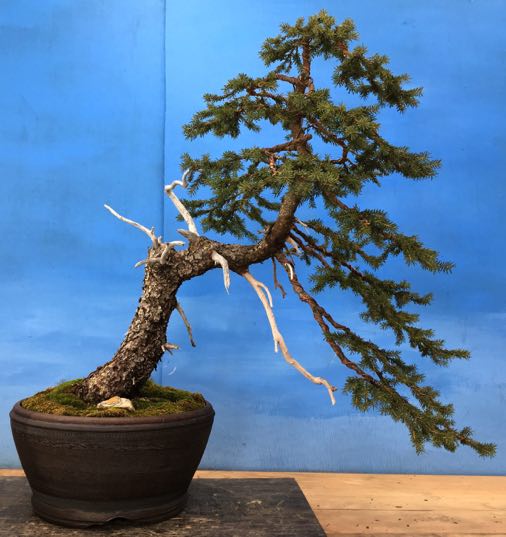
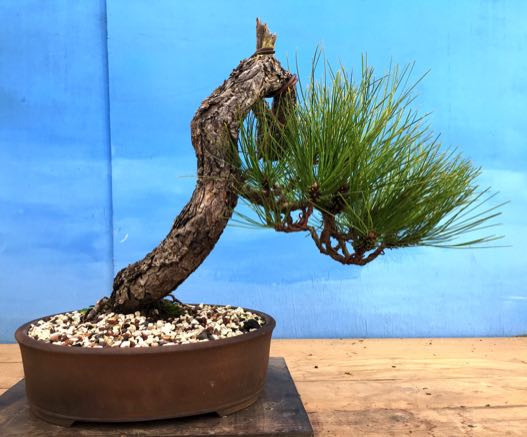
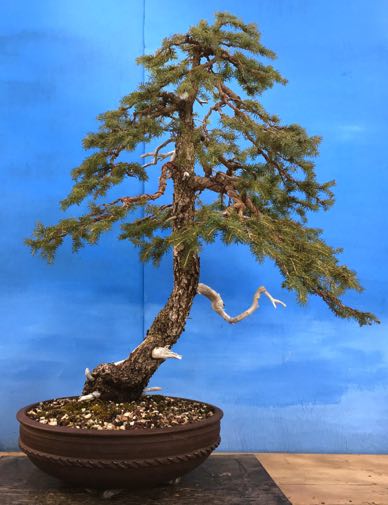
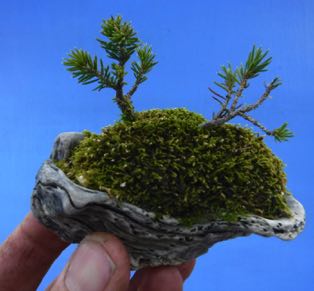
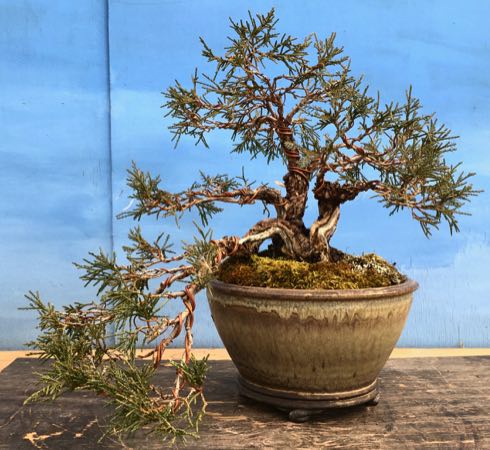
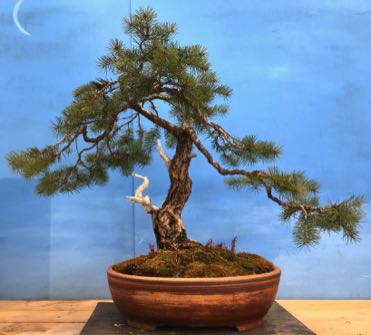
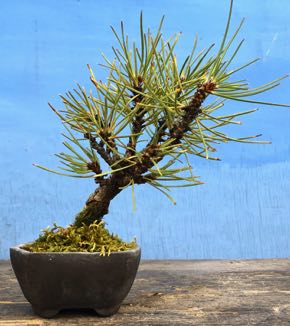
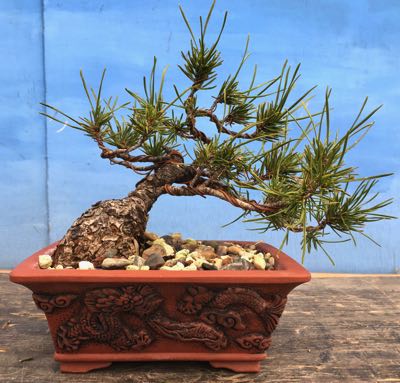
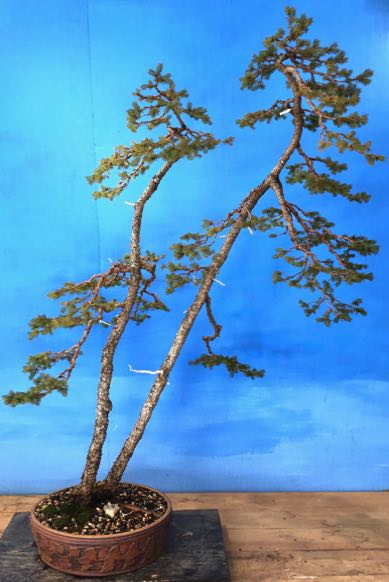
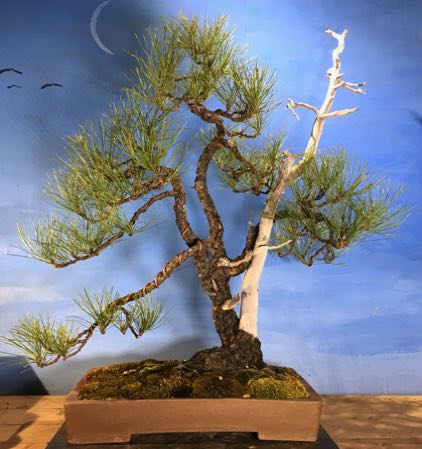
The Chinese and Japanese art of Bonsai, or the art of keeping miniature trees in pots, was first developed by Buddihst monks, possibly as long as 2,500 years ago. The art of Bonsai was at first a religious quest, in which a monk would search in the wilds, possibly for years, to find a perfect natural bonsai specimen. Such a search was associated symbolically with the quest for the true self and the realization of reality. For such monks, growing a bonsai tree was one way of establishing a link with the Creator, the maker of the living universe.

In the Indian Upanishads the Tree of Life is called Asvattha, and represents the full glory of Brahman unfolding. Asvattha grows upside down, with its roots in the sky. Its branches and blooms are the world we live in. Thus, our world grows downward from God. The Bhagavad-Gita also describes an upside down world tree, but in this depiction the tree represents illusion, which is the basis for the worlds existence. Enlightenment can only be obtained therefore, by cutting the tree down.

In Norse mythology the giant ash tree Yggdrasil is the Tree of Life that supports creation. The tree penetrates the three layers of the universe, joining Heaven, Earth, and Hell together. The branches and leaves of this mighty tree are the sky and the twinkling stars. At the base of the tree the God Odin sits in judgement of the world. The tree has three mighty roots, and beside each of these there is a spring. The roots penetrate the three regions of creation, and underneath one of them the dragon Nidhogge dwells, and perpetually gnaws at the root. The apples of Iduna bring life and youth to those who eat them.

The legend continues that Odin himself was hung from this tree, as a sacrifice to himself. He swung from its branches for nine days, and was wounded with a spear. Here we see again the story of a sacrifice upon the sacred tree. The fact that this version resembled the crucifixion of Christ so closely was said to help in the conversion of the Germanic tribes to Christianity. One source notes that in the old Anglo-Saxon language the word "cross" was rendered as "gallows."

It has been noted by many authors how the great ancient cathedrals of Europe, with their majestic arched ceilings and stained glass, recreate the feeling of being in the depths of a great dark forest with sunlight pouring down through an opening in the leafy canopy overhead.
To the Tartars the sacred tree was a birch tree, which grew on a hill in the depths of the forest. The roots of this tree reached around the whole earth. At its base a spring flowed from which the blessed could drink.

We have already seen that the Lakota identified the Tree of Life as waga chun, the cottonwood. Other Native American and South American peoples undoubtedly had their own versions of this same basic myth.

These stories, and many others, show again and again the mystery of life represented in the image of a sacred tree, growing at the very center of creation. The sacred tree is an expression of the oneness from which all life springs, and to which all life returns. It is male and female, incredibly ancient and forever young, yin and yang. Its roots penetrate the underworld, and its branches embrace the heavens. From its base flows the water of life. Its sap is golden. Frequently it is found growing on a hilltop, in a garden, or on a sacred mountain in the center of the world. It is covered in bloom, and singing birds, and jeweled fruit, which can bestow immortality upon those who eat it. Its sign is the cross, which intersects the center of creation, or the circle, which surrounds it. Frequently it is guarded by a dragon or a serpent. And it is only by self-sacrifice that one can attain the Tree of Life.

With these thoughts in mind consider the tale of Pinnochio. The story starts with Pinnochio as a lifeless, wooden doll. But the Blue Fairy comes and brings the wood, the tree, back to life. However, Pinnochio is not yet a real boy, and the only thing that grows on him is his nose, when he tells a lie. By sacrificing the truth he can indeed get some growth, but not the kind he wants or needs. It is only when he sacrifices himself and dies to save his friend Geppetto that he can be reborn as a real, living human being. This story has no sacred tree per se, yet Pinnochio, made of wood, is himself a sacred tree, and brings the age old myth to life admirably well.

However, not all cultures have been so civilized in their idea of sacrifice. Ancient religions the world over have practiced making sacrifices, both animal and human, to trees, or sacred groves. The Canaanites used an Asherah, or sacred tree trunk, as an integral part of their religious ceremonies. In several places the Bible directs the Israelites to cut the sacred groves of their enemies. Deuteronomy 12:2-3 commands the Israelites to "utterly destroy all the places where the nations whom you shall dispossess serve their gods, on the high mountains and on the hills and under every green tree."

"And you shall tear down their altars and smash their sacred pillars and burn their Asherim with fire..."

However, tree worship was a hard custom to ban, and there are indications that the Israelites themselves even practiced it for a time. In pre-Christian Europe almost every village had its sacred grove, where animal, and sometimes human sacrifices were made to the local deities.
Animal sacrifices to trees were practiced as late as 1913 by the Russian Volga Finns. According to a witness who recorded one such ceremony, certain trees were worshiped in and of themselves, while others were dedicated to various nature gods, such as "The Great Jumo." The favored trees for sacrifice were lime trees, although oak and birch trees were also used. The ceremony took place at mid-summer, and the sacrifices were performed while facing to the east. Sacrificial animals were chosen from the best of the local flocks, but only "pure" animals could be used. That is, the animals could never have been used for labor or breeding or any domestic purpose. They must have been set aside as an offering, almost from birth.

In general, Europeans were well known for their worship of, and sacrifices to trees, Germans and Celts in particular. The victims heads, and sometimes the whole victim, were frequently hung on the revered tree as an offering. The tree was given the life of the victim, but in return the victim supposedly partook of the immortality of the tree. The Norse god Odin was associated with sacrifice by hanging, in myth and in actual fact. Thus Odin was also called "The Hanging God", "The Dangling One", and "Lord of The Gallows."

The use of trees as hanging trees for public executions may have had its roots in these barbaric religious practices. Similarly, the ancient Hebrew custom of crucifixion may have been derived from some form of tree worship.

In Rapid City, Dakota Territory, on June 24, 1877 three accused horse thieves were hung from a spreading ponderosa pine that overlooked the city. Two of the men were actual horse thieves, but the third was a seventeen year old boy who had merely ridden into town unwittingly with the other two. Although this became clear before the lynchings, the unsympathetic vigilantes hung the boy anyway, telling him that "Dead men tell no tales." It is said that for years afterwords residents of other Hills towns referred to Rapid Citians as "The Stranglers," because the men had been poorly hung and died slowly. Today, the weathered snag of the old hanging tree can still be seen along skyline drive.

The custom of worshipping trees has survived down to the present day, in many forms, and in many disguises. In Japan, very ancient trees are publicly venerated, and are well known throughout the country.

And we should not forget that even in our consumer driven modern society, the biggest spiritual and commercial holiday of the year is Christmas, the most visible symbol of which is the Christmas tree. Here again we see a faint reflection of the sacred tree, hung with offerings (ornaments), bedecked with lights and garlands, and symbolizing immortality through the birth of Christ. And it is a quaint, but very ancient custom, that the gifts we give each other are first offered through the tree, and heaped around its base.

Trees have been seen as the abode of fairies and wood spirits longer than recorded history. Europe has a rich tradition of gnomes, dwarves, wood-nymphs and moss-wives, all of which lived in trees. These spirits were both helpful and troublesome to humankind, and in general they were viewed as guardians of the forest. Similar creatures, the Can-Oti, or Tree Dwellers, appear among Lakota mythology. These forest spirits lived in trees and played mischief on men wandering through the woods. They resembled grotesque little men, like the dwarves and gnomes of European superstition.

It may well be that the custom of "knocking on wood" for luck, was first derived from mans attempt to enlist the aid of these spirits. In Sweden, the ward-tree was a special tree, usually a lime tree, inhabited by a spirit (Tomte) that offered protection and prosperity to the house in whose yard it grew. If the tree was cut down, the prosperity of the house would cease. However, sometimes the tree was cut down first, and incorporated into the house as a rafter or beam, that way giving permanent protection.

Similarly, North German shipbuilders believed in the Klabautermann, a helpful spirit that dwelt in the masts of ships. Such masts had to be made from trees that had been split when saplings, and a sick child allowed to pass through the opening. If the child then died, his spirit entered the tree, and later would protect the ship.

It was a common custom in many places to first ask a trees permission, or forgiveness, before cutting it down. The custom in India was to give a tree a warning in advance of cutting it, so that the spirits dwelling in the tree would have time to move out. Japanese farmers allegedly threatened their fruit trees with an axe each spring, to scare them into producing more fruit.
Trees of various species have long been held to contain special powers. In China peach and plum trees are associated with longevity, the curing of diseases, and even immortality. Two legendary brothers, called the Peach Men, drove away demons with amulets hung from a peach tree. They bound evil spirits with reed grass and fed them to the tigers. At the New Year, reed grass is still hung over doorways in honor of the Peach Men, and to drive away evil in the coming year.

In the Grimm's Brothers fairy tale The Juniper Tree, a young infertile wife accidentally cuts her finger and drips some blood at the base of a juniper tree which grows in front of their home, while she is wishing to have a child. She has a son, but dies thereafter, and is buried beneath the juniper. An evil stepmother then enters the scene, who kills the young boy and feeds him to her new husband. However, the boy emerges from the juniper in a flash of fire as a beautiful bird who perches on the tree and sings;

My mother, she killed me
My father, he ate me
My sister, Marlene, she made sure to see
my bones were all gathered together,
bound nicely in silk, as neat as can be,
and laid beneath the juniper tree...

Eventually the bird drops a millstone on the stepmother, killing her, and the boy reappears from the juniper tree. In previous centuries junipers were believed to have the power to ward off witches, and they were frequently planted at the entrance to a home. The legend went that a witch could only pass by a juniper tree after correctly counting all the needles on it.

Junipers and cedars have many sacred and cultural associations, probably stemming from the beautifully scented, rot resistant wood. In the Eastern U.S. the locations of old graveyards can sometimes be determined by the cedars that were planted there. Cedars and junipers are mentioned frequently in the Bible. Nearly everyone has heard of the Cedars of
Lebanon. In the Second Book of Chronicles Solomon built a temple for Yahweh. "The great hall he lined with juniper, which he overlaid with gold..."(3:5). Cedar chests have protected the hopes, and clothing, of new brides against the ravages of time and decay for countless years.

Beech trees and holly trees were frequently planted near homes because both were said to offer protection against lightning. In addition, holly trees also offered protection from witchcraft. It was also believed that holly flowers could freeze water.

One of the more interesting characters in American history is John Chapman, better known as Johnny Appleseed. Johnny Appleseed had a burning love of apples, and traveled the new American frontier on foot, Bible in hand, giving away apple seeds to everyone he met. He was apparently quite a sight, with a tin pan for a hat, shaggy hair, ragged pants, and a shirt cut out of an old gunny sack. As a result of his labors, at least in part, apple trees are now established all over the continental United States.

Recently, I have noticed a new theme developing around trees, probably as a result of the environmental worries of our modern age. Both the movies Ernest: Scared Stupid, and Fern Gully, revolve around conflict with an evil power, or demon, that has been imprisoned in an ancient tree by the wiser men of the past. When modern humans interfere with the tree, either by cutting it down, or building a treehouse in it, the demon is released to wreak destruction on the world. Obviously this theme plays to our fears that modern civilization is destroying the environment, and meddling with powers that are better left alone.

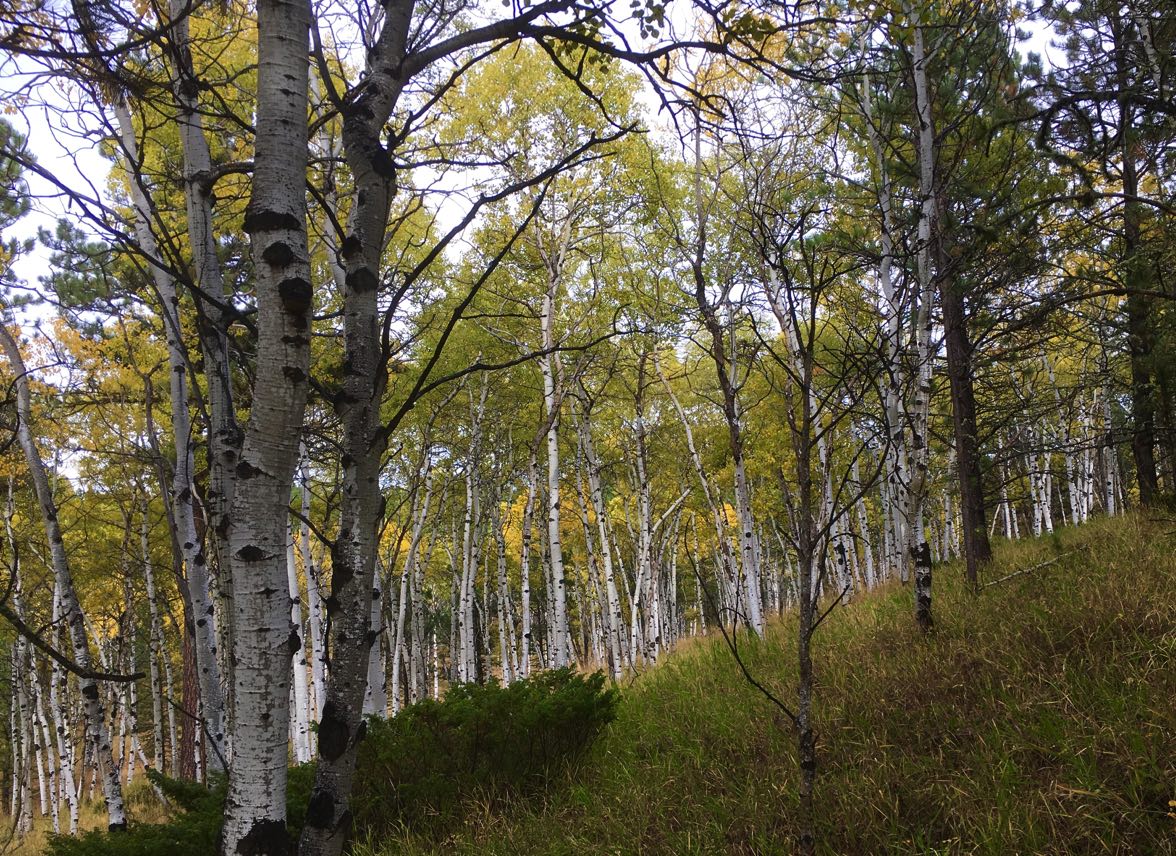
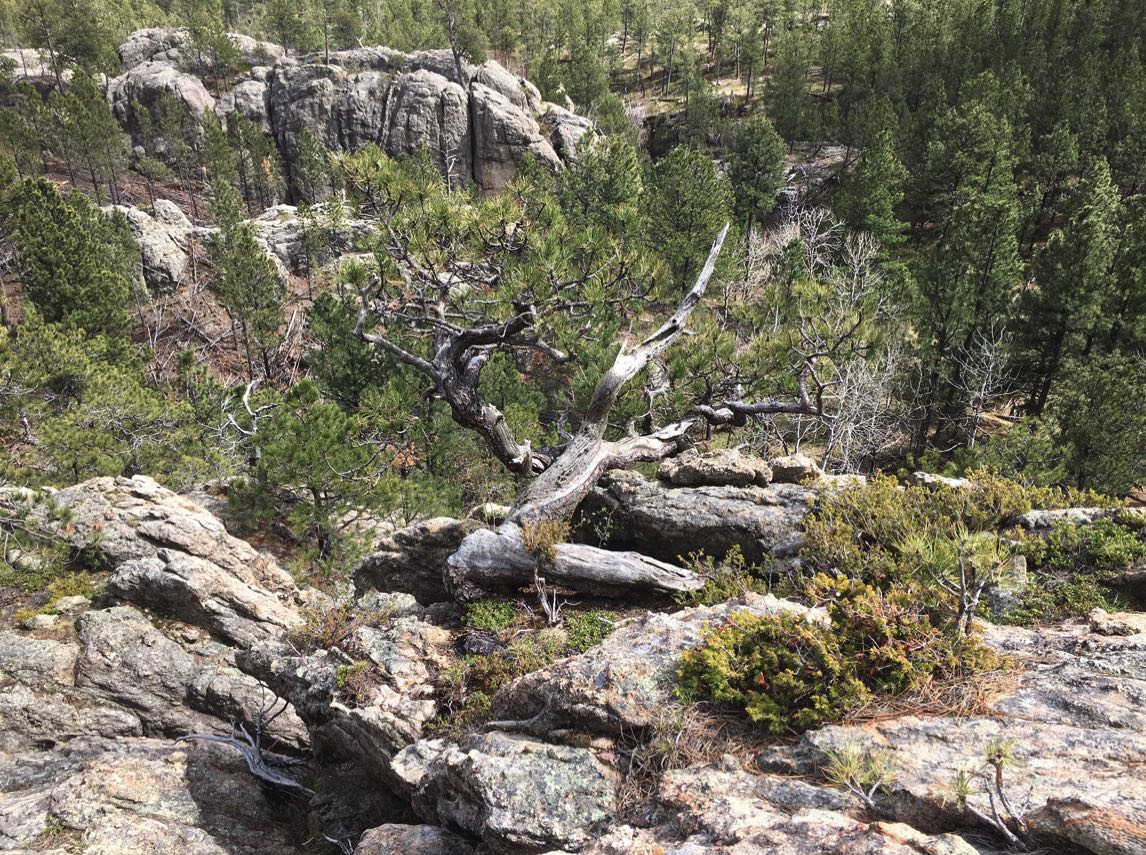
In any case, next time you travel through the Black Hills, take a look at the forest around you. Not only does it provide an ever-renewing source of lumber and jobs for the local economy, as well as a magnificent playground for the hunter, hiker, skier, and fisherman, but it provides the haunting backdrop against which we play out our lives as well. It is a tapestry woven of dreams, superstition, and magic, of ancient myths and legends, of death and rebirth.

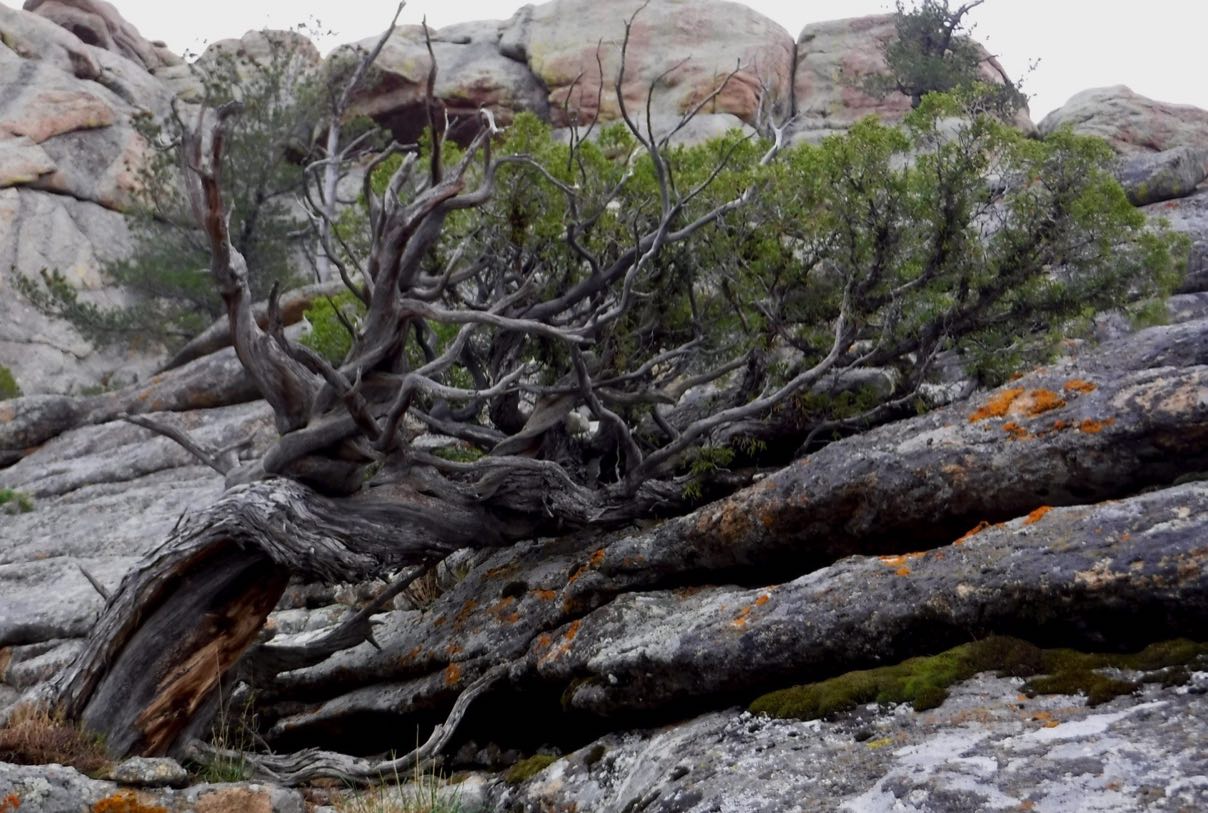
And as you scan the hilltops and rocky ledges, remember that some of these trees were already old when Columbus sailed for the new world. They were old when the Lakota first arrived in the area. They have stood guard on their rocky ridges through the centuries. Who knows what secrets they know? What mysteries they hold? What they someday might teach us?


Back